
Why Do My Plant Leaves Have Water Droplets? Guttation vs. Dew
Have you ever walked through your garden on a cool morning and seen perfect, tiny beads of water hanging from the edges of a leaf, even when it hasn't rained? For years, I assumed this was just dew or maybe the plant "sweating."
It turns out, it's a fascinating process called guttation, and it's a sign of a very healthy, happy plant.
While it looks like dew, it's completely different. Dew forms from condensation on the leaf's surface. Guttation is water that comes from inside the plant itself.
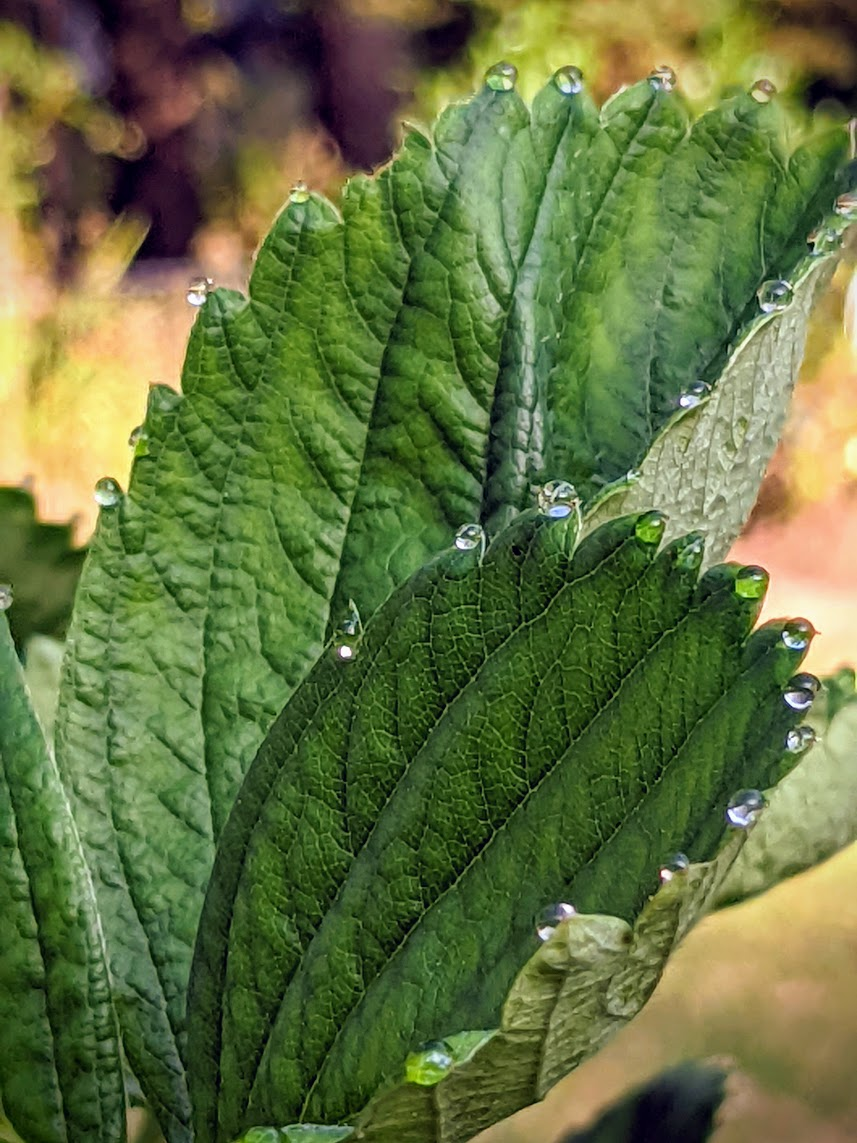
From https://harlequinsgardens.com/transpiration-and-why-it-matters/
What is Guttation?
Guttation is how a plant deals with high water pressure. On cool, humid nights, plants keep absorbing water from the soil through their roots. Since it's too cool and humid for them to "sweat" water vapor out through their leaves (a process called transpiration), the pressure builds up.
To relieve this pressure, the plant forces droplets of xylem sap—which is mostly water, but also contains minerals and sugars—out through special pores called hydathodes located right on the edge of the leaf.
So when you see these perfect little droplets, don't worry! It's simply a sign that your plant is well-hydrated and its internal plumbing is working perfectly. You'll often see it on strawberries, tomatoes, cucumbers, and many other plants in your garden.
How is That Different from Transpiration?
While guttation is the visible release of liquid water, transpiration is the invisible release of water vapor. Think of it as the plant's way of breathing or sweating.
- It happens during the day when the sun is out.
- Plants open tiny pores (stomata) on their leaves to take in carbon dioxide for photosynthesis.
- As they do this, water vapor escapes, which cools the plant and pulls more water and nutrients up from the roots.
So, while both processes involve water, guttation is the "pressure release valve" you can see, and transpiration is the invisible, life-sustaining "engine" that runs during the day.
Noticing these little details is one of the great joys of gardening. It's a peek into the secret, busy world of the plants we care for.
